OMEPF Literacy and Numeracy Programme: Encouraging Signs of Progress in Learner Outcomes
The Old Mutual Literacy and Numeracy program which ran from 2021 to 2024 concluded with some promising results in the 50 primary schools in Mpumalanga where the percentage of learners achieving above 50% in Grade 3 and Grade 6 combined, increased by 4.2% in project schools, compared to 2.6% in control schools. While there are challenges with assessment standardisation and the differences are modest, they suggest that targeted interventions in leadership, school management and teaching practices have played a role in improving learning outcomes.
District-specific trends offer further insight. In Kwa Mhlanga NE Circuit, project schools consistently outperformed control schools, with year-on-year improvements suggesting potential long-term benefits.

Similarly, in Kwaggafontein West Circuit, there are indications that focused interventions may have supported more sustainable learning improvements.

Underpinning the improvement in learner performance, was the emphasis in the programme on strengthening school management practices in schools. These practices were measured over the course of the programme and resulted in an average improvement of 0.8 points on a four-point scale. The most significant improvements in practice maturity were in the areas of Parental Communication (PC) and Curriculum Management (CM) as shown in the bar graphs below:

Another key underpinning indicator used in the programme was the number of schools which had fully developed school implementation plans (SIPs) in place which were being implemented. Here schools improved from an average baseline of 1.7 (2022) to a final score of 3.1 (2024) on a four-point scale – an 82% improvement, in terms SIP implementation.
A third foundation indicator of progress towards sound school management is curriculum tracking and this improved from an average of just over 40% to 90% in the first year of the programme and was maintained at over 90% for the remaining duration of the programme. Unfortunately, the pilot transition from manual tracking to online tracking was less successful as is indicated later.
The programme was fully supported by the MPL DoE, and the active involvement of Circuit Managers and Subject Advisors ensured that there was strong alignment between priorities of the Department and the activities in the programme.
Interest and commitment to the programme was extremely high with an average participant rate of 92% over the fourteen modules which were trained and coached over period of 3 years.
Modules which had the greatest bearing on literacy outcomes included Curriculum Management, Curriculum Coverage, Assessment Outcomes Analysis and Reading Management. Schools managed to implement 74% of the new practices which were introduced through these modules.
Other modules which were found to be most valuable by participants included Financial & Resource Management, Psycho-Social Support & Community Engagement.
339 participants including principals, deputies and SMT chairs were involved over the course of the programme and the schools rolled out parental support sessions to 5066 parents – an average of just over 100 parents per school.
Coaching on the new practices trained in the workshops was conducted partly in contact mode and partly on-line. Contact mode was used in times of loadshedding and outages and the online at times when connectivity was less unaffected. Significant savings were made in terms of travel and time costs with online coaching thus enabling the programme to be run at a total average cost of R36,000 per school per year which equates to R5,309 per participant per year.
By the end of the programme all but three schools had reached an average practice implementation of over 60% which is indicated that the new practices trained are in place – however, one would be looking for over 80% as an indicator that the practice is now firmly entrenched and part of the way in which the school is run. Reliance will have to be placed on support form the Circuit Managers and Subject Advisors to reach this target.
Importantly however as indicated, the average implementation status at all the schools of the practices associated with reading was 74% and this bodes well for reading improvements continuing in the majority of schools.

Connectivity at the schools was on the whole, reasonably good with 26-37% of schools experiencing unreliable connectivity. In these cases, principals and others made plans to get to centres where there was more reliable Wi-Fi connection for these sessions. IT support for devices and technology problems was however a major challenge and a pilot project to provide an online curriculum tracking instrument for formal, informal assessments and coverage could not be completed because of challenges of getting users on M365 (which is offered for free) to be able to access a SharePoint backend.
Other learnings from the programme included the following:
Strong engagement and collaboration with district officials helped resolve challenges and sustain momentum
Having a clear but flexible long-term programme with built in M&E helped to get all aligned on how all the parts fitted into the bigger picture
Rigorous school classification across a number of indicators has proven valuable in tailoring coaching to different school needs.
There is room for greater collaboration among programme managers and service providers with more regular learning engagements to align efforts are aligned for maximum impact.
Stronger IT support and infrastructure including devices will be critical if schools are to transition to Education 4.0 and really prepare learners for the new world of work.
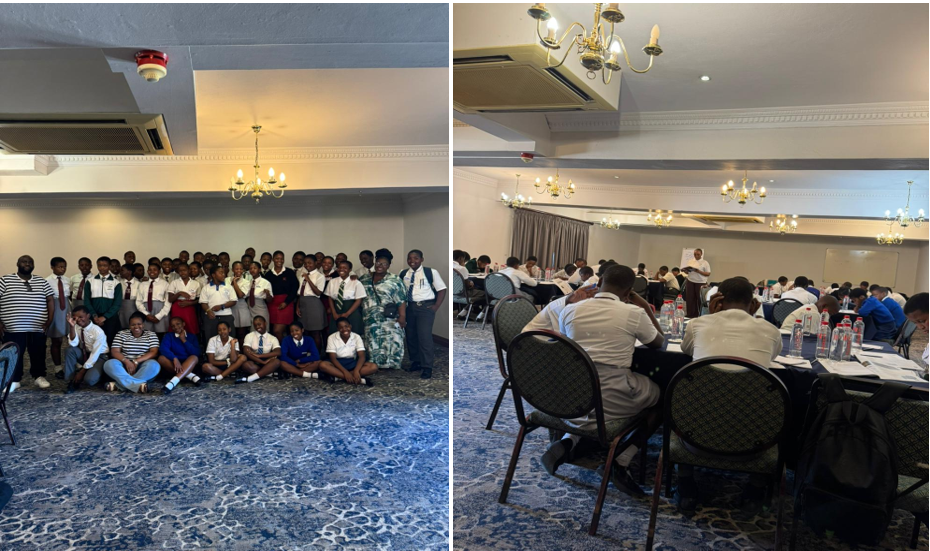
The programme concluded with a series of award ceremonies where 81 participants were awarded Certificated for consistent participation, 28 schools received Certificates of Distinction and the 3 top schools in terms of new practices and assessment outcomes were awarded Certificates of Excellence.

Performance Solutions Africa thanks both Old Mutual and the MPL Department of Education for the opportunity to participant in the OMEPF Literacy and Numeracy Programme.


Comments