PLCs and Key Educational Transition Points
For many education programmes, Professional Learning Communities (PLCs) are promised as the route to sustainable teacher improvement — but too often they wither, plagued by vague agendas, sporadic meetings and no classroom impact.
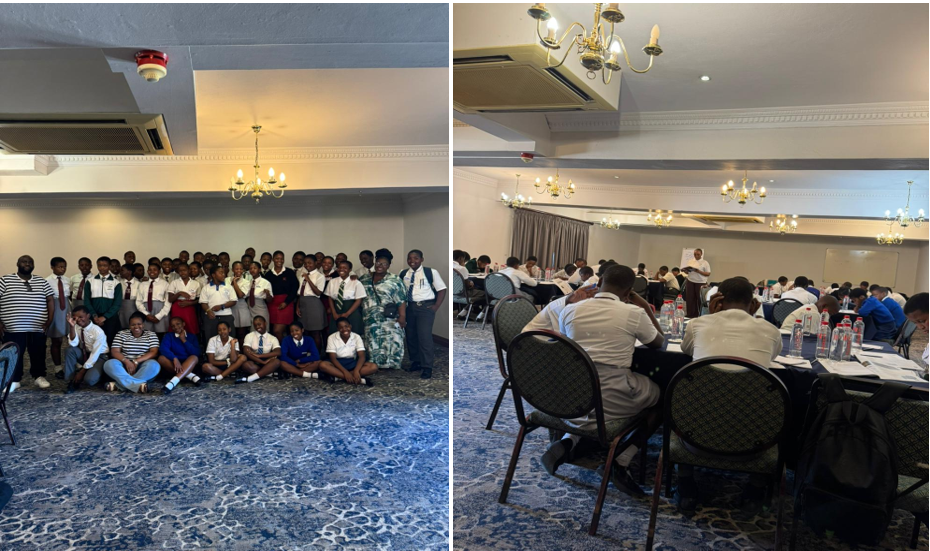
The Mkhulise programme is seeking to test a PLC model which focuses on the two “handover” moments where learners lose the most — Grade RR-R (ECD to Primary), and Grade 7-8 (Primary to Secondary). Thus far our results are modest, but we have reached a point where our Grade 7-8 PLC is meeting termly, and it is led by the participants from primary and secondary schools themselves.
The challenges at the two transition points are well documented. At Grade RR-R, learners face new routines, sharper expectations and a different social world. The Grade 7-8 leap is both academic and psychosocial: bigger classes, subject specialisation and changed peer hierarchies. Thrust from environments they understood and where they had status and influence, new Grade 8s often find themselves in situations where they are seen as unwelcome newcomers deserving of the lowest rung of the hierarchy. The dropout rates are therefore notoriously high.
So, are PLCs even the right vehicle to address these key transition challenges?
Global studies on PLCs specifically set up at these transition points suggest the following key learnings:
UK cluster PLCs show that protected time and external facilitation at start-up can make a real difference
India’s cluster/expert-teacher model shows the value of demonstration lessons and tight, practice-focused tasks
Kenyan NGO/district PLCs show blended follow-ups (face-to-face plus digital) sustain momentum between meetings.
In designing its approach to the PLCs, the Mkhulise programme focused on elements of these case studies viz, timetabled termly PLCs, demonstration lessons and follow up coaching, as well as WhatsApp (digital) updates to keep clusters active between meetings.
What have we learnt about the two transition points?
The Grade R-RR PLC which has only recently started, surfaced three recurring gaps: (a) inconsistent learner profile handovers across the grades (b) limited caregiver involvement especially in home reading, and (c) shortages of shared reading books.
The Grade 7-8 PLC which has now been operational for nearly two years, started off addressing the problem of the “twin drops” - academic results and leaving school altogether. Attendees at PLC meetings include principals, deputies, Department Heads and district officials. Several initiatives have been undertaken which include:
Reassigning some of the school’s stronger teachers to Grade 8 duties and at the same time fostering a culture of professionalism which regards the teacher at Grade 8 as just as important as teachers at any other level
The development of subject clusters (Maths, Languages, now Science) - these clusters have begun co-designing standardised or “common” assessments where none existed before - they will help to more accurately assess learner capabilities and align expectations between teachers at the two grades
Steps taken to encourage much greater use of the Data-driven Districts Dashboard (DDD) to analyse learner performance and to undertake the necessary remediation - comprehensive learner records will in future be handed over firstly, on a manual basis and then digitally using the DDD to its full extent.

Going forward the Mkhulise programme plans to prioritise the following focus items for the two PLCs:
Finalise and mandate an agreed handover template for every transitioning learner (academic + psychosocial)
Give subject clusters a clear product goal: one bank of common diagnostic items per subject (draft → trial → bank) and a calendar for common marking days
Fund a reading book pool and a parenting pilot for Grades RR and R.
Measuring the success of the work of the PLCs is expected to be demonstrated through improved learner results at Grade R and Grade 8 and a reduced level of Grade 8 dropouts. An independent longitudinal learner study will be carried out for Grade RR to Grade 3 learners to track their progress.
Finally in terms of the PLCs themselves – these are not a silver bullet or a holy grail – they require constant attention and readjustment. However, the programme will, based on the international literature be aiming for the following:
Calendarizing termly PLCs at district and school level and treating dates as set in stone
Establishing the DDD as a direction setting dashboard
Maintaining a clear set of outputs
Ensuring that participants own the meetings and the progress or lack thereof.


Comments